Apple’s Next Technology Bet: Can AI-Powered Smart Glasses Create a New Consumer Market?
25 November 2026
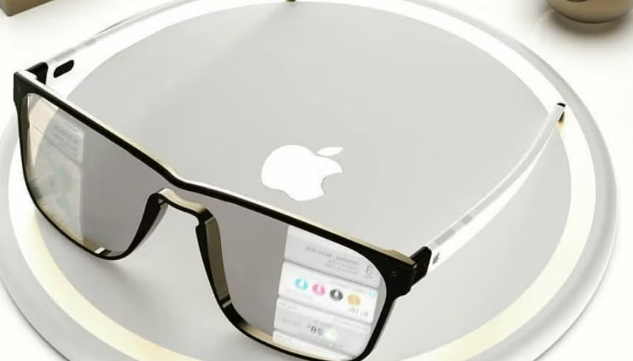
Apple is reportedly targeting a 2027 debut for its first AI-powered smart glasses. The opportunity is real: the category is growing quickly and could make digital assistance more natural. But turning a promising wearable into a mass-market product will require more than putting Siri in a familiar frame.

Apple’s next hardware frontier
Apple’s reported work on AI-powered smart glasses signals a strategic move beyond the smartphone and mixed-reality headset. The company is not expected to begin with a full augmented-reality display. Instead, reports describe a lighter, display-free device built around cameras, microphones, speakers and Siri, paired closely with an iPhone.
Bloomberg reporting summarised by MacRumors on 15 November 2026 says Apple is aiming to unveil the glasses at its Worldwide Developers Conference in June 2027, with shipping targeted before the end of that year. The reported internal codename is N50. These remain reported plans, not an Apple product announcement, and the timetable could change as software development continues. The latest report says the hardware is relatively advanced while AI and software work remains a potential source of delay.
The distinction between smart glasses and augmented-reality glasses matters. A device without a display does not need to place digital graphics across the wearer’s field of vision. It can focus instead on audio interaction and camera-based visual understanding.
A market is forming before Apple arrives
Apple would enter a category that is no longer purely experimental. Counterpoint Research reported that global AI-glasses shipments rose 263% year over year in the first half of 2026. Display-less AI glasses accounted for 96% of those shipments, while shipments in that segment increased 258%. Counterpoint estimated that Meta held about 94% of the display-less AI-glasses market in the period, underscoring both the category’s momentum and the scale of the incumbent’s lead. Counterpoint’s market update attributes much of the expansion to Meta and EssilorLuxottica’s wider product range and distribution.
IDC’s broader smart-glasses tracker offers another indication of the category’s potential. It reported that global smart-glasses shipments grew 167% year over year in the first quarter of 2026, reaching approximately 2.25 million units. IDC forecast full-year shipments of about 13.6 million units in 2026, rising to 27.3 million by 2030. The definitions and coverage used by research firms can differ, so these figures should not be combined as if they measured precisely the same product set. They nevertheless point to a market moving beyond novelty. IDC’s market overview also identifies Meta as the leading vendor.
For Apple, the figures offer validation but not a guarantee of success. Meta has already established a recognisable product proposition through Ray-Ban-branded frames, camera capture, calls, music and AI assistance. Apple would need to persuade consumers that its version does something meaningfully better, not merely that it carries a familiar logo.
Why Apple’s ecosystem could be its advantage
Reports suggest that Apple’s first glasses would depend heavily on a paired iPhone. The phone would handle much of the processing and app interaction, allowing the frames to remain comparatively light and less power-hungry than a fully independent computer. This approach fits Apple’s established hardware strategy: the value of a new device often comes from how smoothly it works with products and services customers already own.
The reported feature set includes asking Siri to identify buildings, explain objects, translate signs or conversations, provide directions and suggest what to cook based on ingredients visible in a refrigerator. The glasses are also expected to support calls, messages, notifications, calendars, reminders, music and smart-home controls.
The app ecosystem could be more important than any single AI trick. According to the November report, Apple wants Siri to trigger functions inside existing iPhone apps, potentially allowing users to request a ride, order coffee, shop or book a restaurant without developers building separate glasses applications. If this works reliably, Apple could make the glasses useful from the first day by connecting them to services people already use.
That strategy also creates a constraint. Requiring a recent iPhone would narrow the addressable market and exclude Android users. It could deepen customer loyalty within Apple’s ecosystem, but it would make the glasses less universal than a platform designed to work across phones.
The lesson from Meta: design and distribution matter
Meta’s progress suggests that consumers may prefer smart glasses that look like normal eyewear rather than miniature computers strapped to their faces. The Ray-Ban partnership gives the product fashion credibility, established optical retail channels and a range of familiar styles. That combination addresses a basic consumer requirement: a wearable has to be comfortable and attractive before its technology can become part of a daily routine.
Apple’s reported decision to explore several frame shapes and finishes suggests that it recognises the importance of personal style. Still, the company may need partners with deep expertise in lenses and optical distribution if it wants to compete beyond its own stores.
Privacy could become the category’s defining test
The most serious obstacle may not be battery life or AI accuracy. It may be whether other people feel comfortable around someone wearing camera-equipped glasses. A device that can see and hear the environment creates a privacy issue for bystanders who have not chosen to use it and may not know when recording is taking place.
Reuters reported in October 2026 that European regulators and advocacy groups were scrutinising smart glasses over covert recording and the handling of captured data. The European Data Protection Board had raised concerns about the potential for recording people without their awareness. Reuters also described proposals such as visible recording indicators, sound alerts, limits on live streaming and technical restrictions in sensitive locations. The Reuters report shows that privacy is becoming a regulatory and reputational issue, not simply a feature checkbox.
For Apple, the stakes are particularly high because privacy has long been a central part of its brand positioning. Reporting has suggested the company is considering safeguards such as on-device processing and limits on facial recognition, while trying to distinguish its approach from concerns surrounding rival products. Those details are not confirmed product specifications. What matters commercially is whether Apple can explain, in simple terms, when the glasses are capturing information, where that information is processed, how long it is retained and how users control it.
Useful assistance must outweigh friction
Smart glasses promise hands-free convenience, but the benefit has to be frequent and concrete. Translating a sign while travelling, asking for directions while walking, identifying an unfamiliar object or receiving a discreet reminder can be valuable. By contrast, a voice assistant that misunderstands requests, interrupts conversations or requires repeated commands could quickly become irritating.
Battery life, heat, connectivity and audio quality will shape the experience. Small frames have limited room for batteries and processors. Relying on an iPhone reduces the hardware burden, but performance may depend on the phone being nearby and connected. Apple must also decide which functions work offline and how the glasses behave when a connection is unavailable.
Price will matter. Consumers already own smartphones, earbuds and often smartwatches, so a new wearable must justify an additional purchase. Prescription options could broaden the audience, but they add complexity to manufacturing and retail.
Can Apple create a new consumer market?
Apple does not need to replace the iPhone to make smart glasses a meaningful business. A more realistic first goal would be to establish a useful companion device that makes selected interactions faster and more natural. If consumers begin to rely on visual assistance, hands-free communication and contextual reminders, the product could create a new layer in Apple’s ecosystem while generating demand for services and accessories.
The opportunity is substantial, but the competitive starting point is uneven. Meta has an early lead in shipments and has demonstrated that fashionable, display-free glasses can attract buyers. Google, Samsung and other manufacturers are also investing in AI wearables. Apple’s advantage would need to come from execution: dependable Siri experiences, strong integration with apps, attractive frames, reliable hardware and privacy protections that people understand.
The reported 2027 target gives Apple time to learn from the market’s early growth and its mistakes. It also gives competitors time to improve their products and distribution. The decisive question is not whether Apple can make smart glasses. It is whether the company can make them useful, socially acceptable and comfortable enough that consumers choose to wear them every day. If it succeeds, AI glasses could become a durable new consumer category. If it does not, they may remain an interesting accessory in search of a daily purpose.
Next article :
– Global Health Systems Face New Challenges From Emerging Infectious Diseases
– Global Supply Chains Are Being Rebuilt Around Economic Security Rather Than Low Costs
– Ukraine’s Reconstruction Could Become One of Europe’s Biggest Investment Challenges