The Race to Build Human-Like Robots Is Accelerating Worldwide
26 November 2026
The race to build human-like robots is accelerating as technology companies, manufacturers and governments invest in machines designed to work in environments built for people. Unlike traditional industrial robots, which usually perform fixed tasks behind safety barriers, humanoid robots are intended to move through human spaces, handle different objects and adapt to changing instructions.
Recent advances in artificial intelligence, sensors, batteries and mechanical design have brought the industry closer to practical applications. Yet impressive demonstrations do not mean that humanoid robots are ready to replace workers at scale. The biggest challenge is turning machines that can walk, dance or lift objects into reliable systems that can complete useful tasks safely, repeatedly and at an affordable cost.

immigrationcases.org/
A Global Race Is Taking Shape
Companies in China, the United States, Europe, Japan and South Korea are developing humanoid platforms and the artificial intelligence that controls them. The competition involves more than building a robot with a human shape. Developers need to combine actuators, hands, cameras, sensors, batteries, computing hardware and software into a machine that can understand its surroundings and act reliably.
China has become a major centre of production and experimentation. A Reuters investigation published in August 2026 reported that Chinese companies accounted for about 95% of roughly 20,000 humanoid robots shipped worldwide in 2025. The same report cautioned that many machines still struggle with dexterity, speed and reliability in demanding factory work.
The United States has strengths in advanced AI research and robotics software, while companies in Europe, Japan and South Korea contribute expertise in industrial automation, precision components, sensors and manufacturing. The emerging market is therefore a competition between complete ecosystems, not only individual robot makers.
Artificial Intelligence Is Becoming the Decisive Factor
A humanoid robot needs more than motors and cameras. It must interpret visual information, understand instructions, plan a sequence of actions and adjust when something unexpected happens. Researchers often describe this combination as embodied AI: artificial intelligence that can perceive and interact with the physical world.
Reuters reported in November 2026 that Chinese robotics companies are increasingly directing investment toward the AI systems that control humanoid machines. The report cited 93.5 billion yuan in funding for Chinese embodied-AI companies across 322 deals in the first half of 2026, according to research firm ITjuzi. This funding surge reflects a shift from attention-grabbing hardware demonstrations toward the software needed to make robots useful.
Unlike chatbots, robots learn through physical interaction. They need examples of grasping objects, opening doors, handling tools and responding to objects that move or change shape. Collecting high-quality data can be expensive because the robot must experience the physical task, or learn from demonstrations, sensors and realistic simulations.
Factories and Warehouses Are Early Testing Grounds
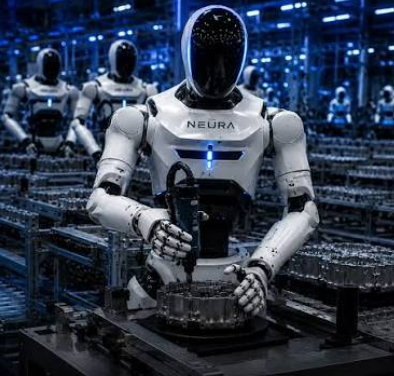
Manufacturing and logistics are among the first sectors testing humanoid robots because many tasks take place in structured environments. Robots may be asked to move containers, sort parcels, carry components or perform repetitive handling work. These jobs can help companies evaluate whether humanoids can operate alongside existing equipment and human employees.
Reuters reported in August 2026 that Chinese companies were demonstrating humanoid robots sorting parcels, packing mobile phones and assisting with factory tasks. Some deployments were already taking place, but the report also noted that a large share of shipments still went to entertainment, education, research and data collection rather than productive commercial work.
For many factories, conventional robotic arms and specialised automation systems remain faster, cheaper and more reliable for repetitive tasks. Humanoid robots will need to demonstrate a clear advantage in flexibility, ease of deployment or ability to work in spaces that were not designed for automation.
Investment Is Rising, but Commercial Success Is Not Guaranteed
Investors are placing large bets on humanoid robotics because the potential market extends across manufacturing, logistics, healthcare support, retail and eventually household services. McKinsey noted in April 2026 that robotics venture-capital funding had more than tripled between 2023 and 2025, reaching $40.7 billion annually, while companies across several regions were scaling pilot projects and developing supply chains.
However, investment does not guarantee that every manufacturer will find a sustainable business model. Robots remain expensive to build and maintain. Companies must also pay for software development, safety testing, repairs, training and integration with customer operations. Buyers will compare these costs with the productivity and reliability of human workers and existing automation.
A report by the Mercator Institute for China Studies (MERICS) in April 2026 described China’s advantages in manufacturing scale and policy support, while noting that its humanoid robots still lacked precision and dexterity for many real-world tasks. The report also said costs would need to fall substantially for wider commercial adoption.
South Korea and Europe Have Important Roles in the Supply Chain
The humanoid robotics industry depends on a wide range of specialised components. Actuators create movement in joints, sensors help robots understand their surroundings, and precision mechanisms allow hands to grip and manipulate objects. These components connect humanoid development to established industries such as automotive manufacturing, electronics and industrial automation.
Goldman Sachs Research wrote in June 2026 that South Korea’s automotive supply chain and expertise in motors, sensors and precision engineering could support its role in humanoid robot production. Its estimates for future production shares are projections rather than confirmed outcomes, but they illustrate the potential importance of component suppliers.
Europe also has strengths in industrial machinery, engineering and advanced components. A Carnegie Endowment analysis published in March 2026 argued that European firms need to strengthen their ability to produce complete AI-enabled robotic systems while maintaining their position in hardware. The global contest will depend on access to components, engineering talent, software and customers willing to test new machines.
Workforce Effects Will Depend on Where Robots Become Useful
Humanoid robots could eventually take on physically demanding, repetitive or hazardous tasks. In factories and warehouses, they may help move heavy items, work in difficult environments or support operations that struggle to recruit enough staff. In other sectors, they could assist with inspection, stock handling and basic service activities.
The effect on employment is unlikely to be uniform. Some tasks may be automated, while new roles emerge in robot maintenance, supervision, safety, software and fleet management. The speed of change will depend on cost, reliability, regulation and whether robots can perform tasks at a level that makes economic sense.
For employers, the immediate question is often not whether a robot can perform a task once, but whether it can do so throughout a shift with predictable performance and minimal downtime. That standard is much harder to meet than a controlled demonstration.
Safety, Regulation and Public Trust Matter
Humanoid robots are designed to share spaces with people, which makes safety essential. A machine operating near workers must detect obstacles, control its force, respond to faults and stop when conditions become unsafe. Developers and regulators will need clear standards for testing, cybersecurity, data protection and responsibility when a system causes harm.
Public trust will also depend on how companies use robots and the information they collect. Machines equipped with cameras and microphones may process sensitive workplace or household data. Transparent policies and robust security will be important as robots move beyond controlled industrial settings.
The Next Stage Is Practical Performance, Not Spectacle
The global humanoid robot race is entering a more demanding phase. Companies have shown that machines can perform impressive movements, but customers need robots that can complete useful work safely, accurately and consistently. Better AI, higher-quality training data, improved hands and lower component costs will all be necessary.
The winners may not simply be the companies that build the most human-looking machines or ship the largest number of units. Long-term success is likely to depend on whether a robot solves a real operational problem at a competitive cost. Until that happens across a broad range of tasks, humanoid robotics will remain a promising but still developing industry.
Sources:
Reuters — China can build kung fu-fighting robots. But it can’t get them to do factory work, 27 August 2026
Reuters — China’s robot makers have mastered the moves. Now comes the race for brains, 1 November 2026
McKinsey — Turning humanoid supply chain constraints into billion-dollar wins, 17 April 2026
MERICS — Embodied AI: China’s ambitious path to transform its robotics industry, 30 April 2026
Goldman Sachs Research — South Korea’s Growing Role in Humanoid Robot Development, 25 June 2026
Carnegie Endowment — Europe’s Role in General-Purpose Robotics, 25 March 2026
Editorial note: This article distinguishes reported deployments and funding figures from forecasts and industry projections. Humanoid robot capabilities remain uneven and vary by task and operating environment.
Next article :
– Global Health Systems Face New Challenges From Emerging Infectious Diseases
– Global Supply Chains Are Being Rebuilt Around Economic Security Rather Than Low Costs
– Ukraine’s Reconstruction Could Become One of Europe’s Biggest Investment Challenges