Why the Arctic Is Becoming One of the World’s Most Strategic Regions
22 November 2026
immigrationcases.org/
The Arctic was once widely viewed as a remote frontier, defined by extreme weather, limited infrastructure and a relatively small human presence. That perception is changing. Rising temperatures, shifting access to natural resources, emerging maritime routes and renewed military activity have pushed the region closer to the centre of international politics and the global economy.
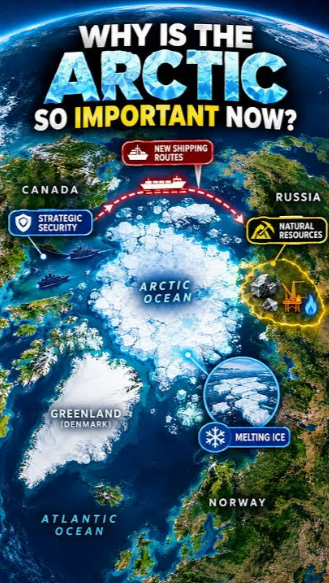
The Arctic matters because geography, security, trade and climate change meet there. It borders North America, Europe and Asia, hosts important military facilities and contains valuable energy and mineral resources. As sea ice patterns change, governments and companies are paying closer attention to routes and projects that were once difficult or uneconomic to pursue. Yet the region remains dangerous, expensive and environmentally fragile. Greater access does not mean that the Arctic has become easy to develop.
A Region at the Crossroads of Global Security
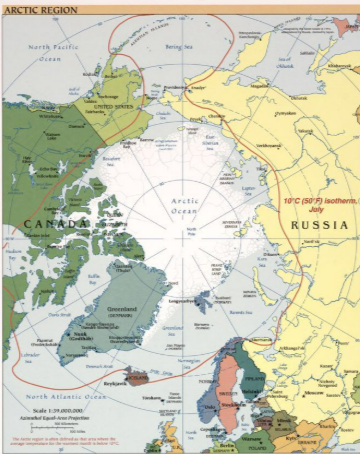
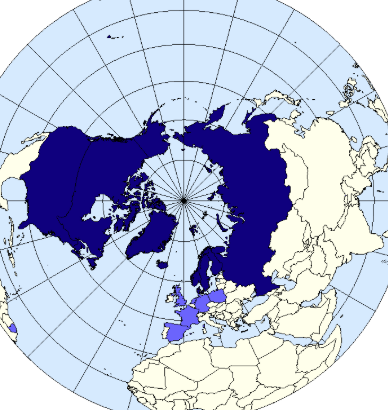
Eight countries have territory in the Arctic: Canada, Denmark through Greenland, Finland, Iceland, Norway, Russia, Sweden and the United States through Alaska. Their interests overlap in a region that is strategically important for surveillance, early warning, naval operations and access between the Atlantic and Pacific oceans.
Russia has the largest Arctic coastline and treats the region as central to its national security and economic plans. A Congressional Research Service report published on October 14, 2026, says Russia’s Northern Fleet is based in the Arctic and operates a major share of the country’s sea-based nuclear deterrent. The report also describes Moscow’s efforts to modernise military facilities and protect its interests along the Northern Sea Route.
For NATO members, the Arctic is increasingly connected to the security of northern Europe and the North Atlantic. Finland and Sweden joining NATO has changed the alliance’s geography and planning in the High North. The UK Parliament’s March 2026 briefing describes a shift from the earlier idea of the Arctic as a region of low tension toward one of growing geopolitical competition.
Russia, the United States and NATO Are Watching Closely
Russia’s Arctic strategy combines military security, sovereignty claims, resource development and control over maritime access along its northern coast. Moscow has invested in bases, airfields, ports and ice-capable vessels. The scale and pace of future projects, however, depend on funding, technology, personnel and the wider economic impact of sanctions.
The United States views the Arctic as important to homeland defence, access to the North Atlantic and the protection of allied territory. Washington has also focused on icebreakers, surveillance and cooperation with Arctic partners. Canada and the Nordic countries have their own security concerns, particularly around infrastructure, search and rescue, maritime awareness and the ability to operate in severe conditions.
NATO launched Arctic Sentry in February 2026, according to the Congressional Research Service, as part of a stronger alliance focus on the region. Russia has criticised NATO activity, while NATO members describe their presence as a response to a changing security environment. The risk is that more military activity, limited communications infrastructure and difficult weather could increase the chance of miscalculation or incidents.
China Wants a Role in the Arctic’s Future
China is not an Arctic state, but it has declared itself a “near-Arctic state” and has pursued scientific, commercial and diplomatic interests in the region. Beijing is interested in access to shipping routes, energy projects, minerals and research partnerships. Its Polar Silk Road concept links Arctic shipping ambitions with the broader Belt and Road framework.
China’s role is closely watched because some of its Arctic activity involves cooperation with Russia. For Beijing, the region could eventually offer another route connecting Asian markets with Europe. For other governments, Chinese investment in ports, communications, research infrastructure or resource projects can raise questions about strategic influence and dual-use capabilities.
That does not mean every Chinese commercial or scientific project is a security threat. The challenge for Arctic governments is to assess investments individually, weighing economic benefits against transparency, environmental standards and national-security concerns.
New Shipping Routes Offer Opportunity, but Not a Simple Shortcut
Declining sea ice has increased attention on routes such as the Northern Sea Route along Russia’s Arctic coast and the Northwest Passage through the Canadian Arctic archipelago. In theory, some voyages between parts of Asia and Europe may be shorter through northern waters than through the Suez Canal.
But the commercial case is more complicated than distance alone. Ships may need ice-class construction, icebreaker escorts, specialised crews, higher insurance and additional safety equipment. Weather can change quickly, charts and communications coverage can be limited, and ports and rescue facilities are sparse across large areas. Seasonal windows and ice conditions also vary from year to year.
The UK Parliament briefing notes that shrinking sea ice is increasing the potential accessibility of routes, but that new opportunities remain tied to difficult environmental and geopolitical conditions. For shipping companies, reliability and total operating cost matter as much as the number of nautical miles saved.
Energy and Critical Minerals Add to the Competition
The Arctic is associated with significant oil and natural gas resources, as well as deposits of minerals that may be important for batteries, electronics, defence systems and clean-energy technologies. These resources attract attention as governments seek to diversify supplies and reduce dependence on concentrated sources of critical materials.
The German Marshall Fund’s April 2026 report, The Evolving Arctic Economy, describes expanding activity in resource development, infrastructure, commercial shipping, fisheries, tourism and information technology. It also highlights how changing environmental conditions are reshaping the region’s economic opportunities and vulnerabilities.
Resource extraction in the Arctic is expensive and carries major environmental risks. Projects require roads, ports, power, workers and specialised equipment. Oil spills or industrial accidents can be especially difficult to manage in remote areas, where response times are long and ecosystems recover slowly. In addition, sanctions and political tensions can restrict access to finance, technology and international partners.
Climate Change Is Both Opening Access and Increasing Risk
The Arctic is warming faster than the global average, and the decline of sea ice is one of the most visible consequences. Less ice can expose new areas to shipping and exploration, but it also threatens ecosystems, wildlife and communities that depend on stable ice and predictable seasonal conditions.
Thawing permafrost can damage roads, buildings, pipelines and other infrastructure. Coastal erosion can threaten settlements, while changing ocean conditions affect fisheries and food systems. The same environmental transformation that attracts commercial and strategic interest therefore makes operating in the region more uncertain.
This creates a difficult contradiction. The Arctic may become more accessible for some activities as the climate warms, but the long-term costs of environmental damage and infrastructure instability can outweigh short-term commercial gains. Any development strategy must account for the region’s ecological limits and the rights and knowledge of Indigenous peoples.
Indigenous Communities Must Be Part of Decisions
The Arctic is not an empty space waiting for outside investment. Indigenous peoples and local communities have lived across the region for generations and maintain distinct cultures, economies and relationships with the land and sea. Decisions about shipping, mining, military infrastructure and conservation can directly affect their livelihoods and food security.
Meaningful consultation, local participation and respect for Indigenous rights are essential to responsible development. Projects that ignore local knowledge or concentrate benefits elsewhere can deepen social tensions and create long-term costs for governments and companies.
Infrastructure Will Determine What Is Actually Possible
Even where political interest is strong, the Arctic’s harsh environment makes infrastructure difficult and costly. Ports, airports, broadband connections, weather stations, power systems, icebreakers and search-and-rescue facilities are all essential for safe operations. Building and maintaining them requires long-term investment and cooperation among governments, local communities and private operators.
Satellite coverage and reliable communications are especially important for shipping, aviation and emergency response. Better monitoring can improve navigation and environmental protection, but technology cannot eliminate the risks created by remoteness, extreme cold and rapidly changing conditions.
The Arctic’s Strategic Future Will Depend on Cooperation
The Arctic is becoming more strategically important because it combines military geography, natural resources, possible shipping routes and the consequences of climate change. Competition among major powers is likely to remain a defining feature, but the region’s practical challenges cannot be solved by any one country alone.
Search and rescue, scientific monitoring, pollution response, maritime safety and environmental protection all require coordination across borders. Even when diplomatic relations are strained, channels for technical communication can help reduce the risk of accidents and misunderstandings.
The Arctic is not simply a new commercial shortcut or a remote military frontier. It is a complex region where economic opportunity, national security, climate risk and local rights are inseparable. The countries and companies that shape its future will be judged not only by their ability to gain access, but also by whether they can operate safely, sustainably and predictably in one of the world’s most demanding environments.
Next article :
– Global Health Systems Face New Challenges From Emerging Infectious Diseases
– Global Supply Chains Are Being Rebuilt Around Economic Security Rather Than Low Costs
– Ukraine’s Reconstruction Could Become One of Europe’s Biggest Investment Challenges