The World’s Coral Reefs Face a Critical Future as Ocean Temperatures Rise
27 November 2026
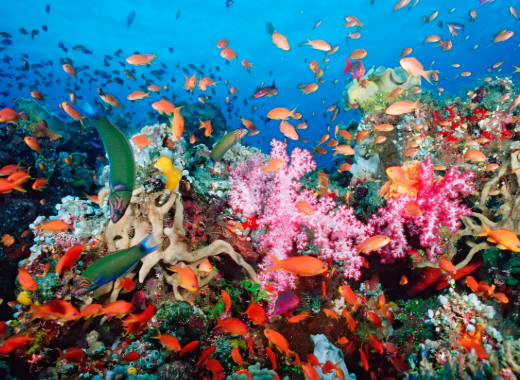
The world’s coral reefs are facing mounting pressure as ocean temperatures rise and marine heatwaves become more frequent. These ecosystems support extraordinary marine biodiversity, help protect coastlines from waves and storms, and sustain fishing and tourism in many coastal regions. Their decline is therefore not only an environmental concern. It also threatens livelihoods, food security and local economies.
Recent international assessments underline the scale of the challenge. The fourth global mass coral bleaching event, which began in 2023, affected reefs across all three major ocean basins. Although the event likely ended in mid-2025, scientists warn that high ocean temperatures and recurring heat stress continue to leave reefs vulnerable. The central question is no longer whether coral reefs are under pressure, but how much can still be protected and restored.

immigrationcases.org/
A Record Global Bleaching Event Has Left a Lasting Warning
On June 2, 2026, the US National Oceanic and Atmospheric Administration (NOAA) said the fourth global coral bleaching event likely concluded in mid-2025. Its analysis found that bleaching-level heat stress affected about 84% of the world’s coral reef area from early 2023 to mid-2025. Mass bleaching was documented in at least 83 countries and territories.
The scale was unprecedented. NOAA said the event was the largest global bleaching event recorded to date. It also noted that scientists are entering a period in which reefs may experience bleaching on a near-annual basis, making the start and end of individual global events increasingly difficult to define.
Coral bleaching occurs when corals under stress expel the microscopic algae living in their tissues. These algae provide much of the energy corals need and give them many of their colours. A bleached coral is not necessarily dead, but prolonged heat stress can cause starvation, disease and mortality. Recovery becomes harder when heatwaves return before reefs have time to rebuild.
Ocean Warming Is the Main Long-Term Threat
Coral reefs are adapted to a relatively narrow range of environmental conditions. When seawater remains unusually warm, corals can become stressed. Marine heatwaves intensify this pressure, particularly when high temperatures persist for weeks or months.
The International Union for Conservation of Nature (IUCN) published a major global assessment on October 22, 2026. It found that 96% of the assessed shallow-water coral reef ecosystems were classified as Critically Endangered under the IUCN Red List of Ecosystems, based on observed conditions and future projections of ocean warming. The assessment covered 127 tropical and subtropical ecoregions and 188,362 square kilometres of reef ecosystems.
The IUCN finding is a risk classification, not a statement that 96% of reefs have already collapsed. The assessment projects the risk of ecosystem collapse by 2075. It also shows why climate projections matter: when researchers considered only observed changes over the previous 50 years, 24% of assessed ecosystems were classified as Critically Endangered. The higher figure includes the expected effects of future heat stress.
Coral Loss Has Consequences Beyond Marine Biodiversity
Healthy reefs provide shelter, feeding grounds and breeding areas for many marine species. They also support fisheries that supply food and income to coastal communities. When reefs deteriorate, fish populations and the wider marine food web can be affected, putting additional pressure on people who depend on coastal resources.
Reefs also act as natural barriers that reduce wave energy and help protect shorelines. Their degradation can increase the exposure of some coastal areas to erosion and storm damage. Tourism is another important source of income in many reef regions, where visitors travel for diving, snorkelling and other marine activities.
The IUCN has highlighted the economic and social risks associated with reef decline, including threats to fisheries, aquaculture and coastal tourism. The Global Coral Reef Monitoring Network’s 2025 status report likewise describes reefs as natural assets supporting food security, livelihoods, coastal protection and cultural identity for close to one billion people.
Climate Change Is Not the Only Pressure on Reefs
Rising ocean temperatures are the most consistent global threat, but local pressures can make reefs less able to withstand heat stress. Pollution from land, sediment runoff, coastal development, destructive fishing practices and overfishing can weaken reef ecosystems.
The IUCN assessment identified overexploitation of important fish groups as a major current pressure in several regions. Parrotfish and other herbivores help control algae that can compete with corals for space. When these fish populations decline, ecological balance can be disrupted and recovery may become more difficult.
Reducing local stress does not stop global ocean warming, but it can improve the chances that reefs survive heat events and recover afterwards. Cleaner coastal water, sustainable fishing and effective marine protected areas are therefore important parts of reef conservation.
Scientists Are Studying Which Reefs Can Withstand Heat
Not all reefs respond to heat stress in the same way. NOAA says some coral areas did not bleach even when exposed to high ocean temperatures. Researchers are studying these locations to understand which biological, environmental and ecological factors may help corals tolerate heat.
This work could improve coral restoration and conservation strategies. Scientists are examining heat-tolerant coral populations, assisted breeding, nursery programmes and methods for restoring damaged reef areas. These approaches may help protect local populations, although they cannot replace the need to limit the warming that drives mass bleaching.
Long-term monitoring is also essential. Satellite observations can identify areas experiencing heat stress, while field surveys help determine whether corals have bleached, survived or died. Combining these sources gives conservation authorities a clearer picture of where intervention may be most effective.
Protecting Reefs Requires Global and Local Action
Reducing greenhouse gas emissions is central to limiting future ocean warming. The IUCN says ambitious emissions reductions must be combined with stronger protection and restoration efforts. Without action on the underlying climate threat, local conservation measures will face increasingly difficult conditions.
Governments and coastal authorities can also improve water quality, enforce sustainable fishing rules, protect important reef habitats and manage tourism carefully. Businesses that depend on healthy reefs, including tourism operators and seafood companies, have an economic reason to support conservation and responsible resource management.
International monitoring networks can help countries compare changes and share conservation knowledge. The Global Coral Reef Monitoring Network’s Status of Coral Reefs of the World: 2025 report brings together data from more than 87,000 surveys across over 36,000 reef sites in 123 reef-bearing countries, territories and economies. Such long-term information is critical for identifying trends and evaluating whether protection efforts are working.
The Future Is Serious, but Recovery Is Still Possible
The latest assessments paint a troubling picture, but they do not mean that all coral reefs are beyond saving. The IUCN notes that many reefs have not yet collapsed and that reducing climate and local pressures can still make a difference. Some reefs show signs of resilience, offering valuable opportunities for science and conservation.
The coming decades will test whether governments, businesses and communities can act quickly enough to protect these ecosystems. Limiting global warming, reducing local damage and investing in science-based restoration will all matter. Coral reefs are vital natural infrastructure, and their future is closely connected to the health and prosperity of coastal societies around the world.
Next article :
– Global Health Systems Face New Challenges From Emerging Infectious Diseases
– Global Supply Chains Are Being Rebuilt Around Economic Security Rather Than Low Costs
– Ukraine’s Reconstruction Could Become One of Europe’s Biggest Investment Challenges